
Stand in the paint aisle long enough and it hits you. Satin paint vs. matte paint sounds simple, but it never feels that way once you start picturing the walls in your home. Same color, same room, totally different outcome depending on the finish.
That choice affects how light moves, how walls feel, and how long the surface holds up over time. This guide breaks down satin paint and matte paint in a way that’s easy to follow, honest about tradeoffs, and grounded in real-world use so you can feel confident before any paint ever goes on the wall.
Key Takeaways:
- Satin paint vs. matte paint affects how light behaves: satin reflects more light, while matte softens and absorbs it.
- Durability differs between finishes: satin handles cleaning and wear better in busy rooms than matte.
- Matte paint hides wall flaws more easily, making it a solid option for older or patched surfaces.
- Satin paint works well in kitchens, bathrooms, and hallways where walls see regular use.
- Finish choice should match room function, lighting, and wall condition, not just color preference.
Why Paint Finish Matters More Than Most People Expect
Color usually steals the spotlight, yet sheen quietly does a lot of the heavy lifting. Satin paint vs. matte paint changes how a room looks during the day, how it feels at night, and how it handles everyday life.
A finish can soften harsh light or bounce it around. It can hide wall repairs or make them stand out. It can stay looking clean for years or start showing wear sooner than expected. Once paint dries, the finish choice sticks with you for a long time.
That’s why it helps to slow down and understand what satin and matte actually do instead of guessing.
Understanding The Real Difference Between Satin Paint And Matte Paint
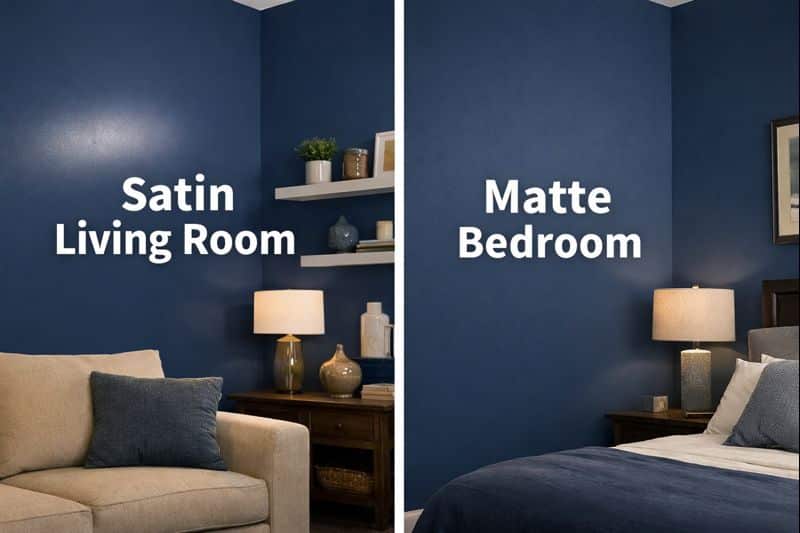
On the sheen scale, satin and matte sit close, yet they behave very differently. Satin has a soft glow that reflects light. Matte sits flat with almost no shine at all.
Here’s the simplest way to think about satin paint vs. matte paint. Satin brings light and durability. Matte brings softness and forgiveness.
Neither is better in every situation. The right paint sheen choice depends on the room, the lighting, and how the space is used day to day.
How Light Changes Satin Paint Vs. Matte Paint
Light exposure plays a big role in how each finish feels once it’s on the wall.
Satin Paint In Bright And Low Light Rooms
Satin reflects light, which can help spaces feel more open. In rooms with moderate lighting, that reflection adds depth and keeps colors from looking dull.
At the same time, satin can show more surface detail. Walls with patches, texture, or uneven areas tend to stand out more once light hits them. That reflection is honest, sometimes a little too honest.
If you’re curious how lighting can shift color itself, the topic of does paint dry darker or lighter ties directly into how sheen and light interact on finished walls.
Matte Paint And Its Light-Absorbing Effect
Matte absorbs light rather than bouncing it around. That gives walls a softer, calmer appearance. It also helps minimize surface flaws, which is why matte often feels more relaxed and consistent across large areas.
In very dark rooms, matte can make spaces feel smaller. In well-lit rooms, it creates a smooth, even look that stays visually quiet.
Durability And Wear Over Time
One of the biggest differences between satin and matte paint becomes apparent once the room is in use.
Why Satin Paint Holds Up Better
Satin contains more resins, which helps it resist scuffs and marks. That extra structure allows for regular cleaning without damaging the finish.
This makes satin a strong choice for:
-
Hallways and entryways
-
Kitchens and bathrooms
-
Kids’ rooms and shared spaces
It’s not just about appearance on day one. Satin tends to keep its look longer in active areas.
Matte Paint And Long-Term Use
Matte paint isn’t fragile, but it does show wear sooner in busy rooms. Frequent contact can leave marks that are harder to remove without changing the surface texture.
That’s why matte is better suited for spaces where walls don’t see constant traffic. Bedrooms, dining rooms, and formal living areas often benefit from the softer look without the daily wear.
If longevity is part of your decision, the topic of how long does paint last connects closely with how different finishes age over time.
Texture And Feel On The Wall
Finish affects more than what you see. It also changes how a wall feels.
Satin dries with a smoother surface that can feel slightly slick. That texture supports cleaning but also highlights roller patterns and application details.
Matte dries with a velvety feel that looks even from most angles. That softness hides inconsistencies and creates a more uniform surface across large walls.
In darker colors, matte can feel especially rich, giving depth without glare.
Where Satin Paint Makes The Most Sense

Satin paint tends to perform best in rooms that balance style and function.
Common uses include:
-
Kitchens where walls see regular cleaning
-
Bathrooms with moisture and frequent use
-
Trim and doors when a subtle sheen is preferred
-
Open living areas that benefit from light reflection
Because satin sits between flat and glossy, it often feels like a safe middle ground. Still, it’s not always the best choice for every wall, especially where surface imperfections are noticeable.
Where Matte Paint Shines

Matte paint works well in rooms where comfort and appearance come first.
It’s often chosen for:
-
Bedrooms and guest rooms
-
Dining rooms and formal spaces
-
Ceilings where reflections are distracting
-
Older homes with patched or uneven walls
Matte keeps attention on the color rather than the surface. That’s helpful when the goal is a calm, consistent look without visual noise.
Cost Differences Between Satin Paint And Matte Paint
Finish impacts price, though the difference is usually modest.
Matte paint typically costs a bit less per gallon. Satin paint includes added binders, which raises the price slightly. On a single room, that gap may feel small. On a full home, it can add up.
That said, price alone shouldn’t drive the decision. Choosing the right finish the first time often saves money by reducing repainting and touch-ups later.
How Finish Choice Affects Color Selection
Color behaves differently depending on sheen. That’s why satin paint vs. matte paint should always be part of the color conversation, not an afterthought.
Satin makes colors appear brighter and more reflective. Matte tones them down and adds softness. A shade that feels perfect in matte may look sharper in satin.
Use paint color visualizers to preview color choices, but finish plays just as big of a role once paint is on the wall.
Interior Finishes And Exterior Considerations
While this guide focuses on interiors, finish choices outside matter too. Exterior walls deal with sun, moisture, and temperature changes, which affect sheen performance.
Understanding exterior paint types helps clarify why certain finishes hold up better outdoors and why interior satin and matte are used differently than exterior coatings.
The same principle applies inside. Environment matters. A bathroom wall behaves differently than a bedroom wall, even with the same color.
Choosing Between Satin Paint Vs. Matte Paint
If you’re stuck deciding, start by asking a few simple questions.
-
How much light does the room get?
-
How often do people touch the walls?
-
Are the walls smooth or patched?
-
Is easy cleaning a priority?
Those answers usually point clearly toward satin or matte without overthinking it.
Final Thoughts On Satin Paint Vs. Matte Paint
The difference between satin paint vs. matte paint comes down to light, durability, and how a room is used. Satin brings resilience and brightness, while matte offers softness and visual consistency. Each finish serves a purpose, and choosing the right one shapes how a space feels long after the paint dries. When finish and color work together, rooms feel intentional rather than accidental. That’s where experience matters most.
Our painting process and how we help:
-
Detailed surface review before any paint is applied
-
Finish recommendations based on room use and lighting
-
Careful prep for smooth, consistent results
-
Clean application that respects your home
If you’re planning an interior update in Brentwood, Franklin, Nashville, or the surrounding areas, Marlin Painting & Remodeling is here to help.
Call us at 615-626-5329 for a FREE estimate and guidance that makes the finish choice feel clear and stress-free.